Thorny Devil in Watercolor Style: An Embroidery Review
First Impressions and the Watercolor Mood
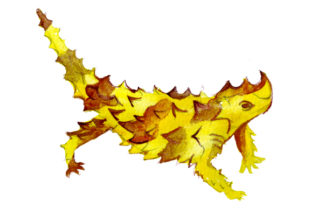
Opening a design file named Thorny Devil in Watercolor Style immediately sets a certain expectation. You anticipate something organic, slightly unpredictable, and far from the rigid outlines that dominate so many machine embroidery design collections. The thorny devil itself is a creature that demands attention. Native to the Australian outback, it carries a prehistoric silhouette, covered in textured spikes and curves that feel sculptural even on screen. When that silhouette gets treated with a watercolor effect, the whole mood shifts. It becomes softer, almost painterly, while retaining the unmistakable identity of the animal.
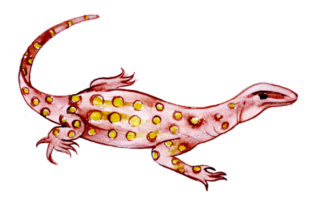
From a designer's perspective, the first question is always whether the watercolor style will translate cleanly into thread. Digital watercolor effects rely on transparency, bleeding edges, and layered washes. Embroidery thread does not bleed. It sits on top of fabric, and every stitch is a deliberate placement. The success of this design as an embroidery project depends heavily on how the digitizer interprets those soft washes into fill stitch areas, running stitch outlines, and perhaps some carefully placed satin stitch accents. The previews in the provided files give a strong sense of the intended mood, and that mood is genuinely appealing. It feels calm, earthy, and distinctively Australian without being loud or cartoonish.
What strikes me most is how the watercolor treatment elevates the subject beyond a simple wildlife silhouette. The thorny devil's spikes become suggestions rather than harsh lines. The body holds subtle color variations that mimic the lizard's natural camouflage. This is not a design that screams for attention. It invites a closer look, and that quality matters when you are building a product that customers will hold in their hands or wear against their skin.
A Real Project Scenario: The Tote Bag Test
Let me walk you through a real scenario I have been considering for this design. A client recently asked for a custom embroidered tote bag that felt both artistic and connected to the Australian landscape. She wanted something that would stand out at a weekend market, not another generic floral or geometric pattern. The moment I saw the Thorny Devil in Watercolor Style, I knew it was worth testing.
I imagined the design placed off-center on a natural cotton canvas tote, roughly seven inches wide. The watercolor effect would need to be stitched with a light hand. Too much density, and the soft washes turn into a heavy, plastic-like patch that fights the fabric. Too little, and the lizard's features dissolve into an unrecognizable blur. The sweet spot lies in using a medium stitch density with a matte polyester thread that mimics the flat, absorbent look of actual watercolor on paper. I would run a few test stitch-outs on scrap canvas before committing to the final tote, adjusting the thread colors to echo the earthy ochres, muted greens, and dusty browns that the design suggests.
The customer reaction angle is worth thinking through here. When someone sees a thorny devil embroidered on a tote bag, they either recognize it immediately and feel a personal connection, or they are curious and ask about it. That curiosity is valuable. It turns a simple product into a conversation starter. The watercolor style softens the creature enough that even someone who is not drawn to reptiles would find it visually interesting. That broad appeal is exactly what a small batch handmade product needs.
Where This Design Shines in Embroidery Projects
After studying the artwork and considering how it would hold up on different surfaces, I can confidently point to several product categories where the Thorny Devil in Watercolor Style fits naturally. Understanding these use cases helps you decide whether the design belongs in your next production run or your Etsy seller shop listing.
- Custom apparel. A sweatshirt with this design placed on the upper chest or across the back creates an understated, artisan feel. The watercolor effect pairs beautifully with soft, garment-dyed cotton or French terry fabric. Avoid high-contrast placements on bright white unless you want a stark, less organic look.
- Tote bags and canvas pouches. As mentioned, natural canvas is an ideal substrate. The texture of the fabric blends with the watercolor stitching to create a cohesive, handmade aesthetic.
- Pillow covers and home decor. A linen pillow cover featuring this design would sit comfortably in a living room with neutral tones and natural materials. The Australian motif adds a subtle travel or nature-inspired accent without dominating the room.
- Tea towels and kitchen textiles. The design's gentle color palette works well on flour sack cotton or linen tea towels. One important note: keep the stitch count moderate here. A heavily stitched design on a tea towel can feel stiff and reduce absorbency, which defeats the purpose of the item.
- Nursery decor and baby items. This one surprised me. The thorny devil, rendered in watercolor, has a storybook quality. On a baby blanket or a nursery wall hanging, it feels whimsical and educational rather than intimidating. Parents who love nature or Australian wildlife would appreciate the uniqueness.
- Patches and small accessories. The design can be scaled down for an embroidered patch, but caution is needed. The watercolor details shrink quickly, and the lizard's spikes can lose definition. A patch format works best if you simplify the watercolor layers and focus on the core silhouette.
Practical Embroidery Considerations
Real embroidery work demands that you look past the preview image and think about how the design actually behaves on fabric. The Thorny Devil in Watercolor Style presents a few specific challenges and opportunities that are worth addressing before you thread your needle.
Stitch Density and Detail Management
Watercolor designs often translate into multiple layered fill stitch areas with varying densities. The thorny devil's body includes subtle color shifts that can be digitized as overlapping regions. The risk is that too many layers create a thick, stiff patch on the fabric. I recommend testing the design on a midweight cotton first, then adjusting the density downward if the stitched area feels too rigid. The spikes along the lizard's back are delicate. If the digitizer uses satin stitch for these, they need to be narrow enough to remain sharp but wide enough to hold their shape after washing.
Fabric and Stabilizer Choices
For apparel projects, a medium-weight cutaway stabilizer is your safest starting point. On stretchy fabrics like sweatshirt fleece or jersey, add a water-soluble topper to prevent the stitches from sinking into the fabric pile. The watercolor effect benefits from a smooth stitching surface, so do not skip the topper on textured fabrics. For tote bags and canvas, a tear-away stabilizer works well, but I often add a lightweight fusible interfacing to the back of the fabric for extra stability without stiffness.
Thread Colors and Contrast
The palette suggested by the design leans toward earthy, muted tones. When selecting thread, choose colors that have a slight matte quality rather than high-sheen polyester, unless you want a glossy finish that contradicts the watercolor intent. Test the design on both light and dark fabric backgrounds. A watercolor effect that looks airy on cream fabric can disappear on a dark navy or charcoal background. If you plan to stitch on dark fabric, you may need to adjust thread colors to maintain visibility and contrast.
Hoop Size and Placement
Before purchasing, confirm the actual dimensions of the design. A watercolor design with soft edges often requires a larger hoop size than you might assume because the visual impact depends on the white space and the feathered edges around the main subject. If the design is too large for your standard hoop, you will need to split it or scale it down, which can compromise the watercolor details. Measure twice, hoop once.
The Format Factor: What You Actually Receive
The product listing clearly states that you receive the Thorny Devil in Watercolor Style in four formats: SVG File, Transparent PNG, EPS, and DXF. Let me be straightforward about what this means for an embroidery professional or a craft business owner. These are digital design asset formats, not native machine embroidery files. You will not receive a DST, PES, JEF, or any other stitch-ready embroidery format. This is not a drawback, but it is a crucial distinction.
The SVG and EPS files are vector formats, which means you can scale the artwork to any size without losing quality. This is excellent for creating mockups, preparing artwork for digitizing software, or using the design for other crafts like screen printing, vinyl cutting, or paper crafting. The transparent PNG gives you a high-resolution raster image with a clear background, perfect for printable mockup creation, product previews, or digital product listings. The DXF format opens doors for laser cutting and engraving projects.
For embroidery specifically, you will need to digitize the artwork yourself or hire a professional digitizer. The vector files provide a clean, scalable starting point for that process. The watercolor effect will need to be interpreted into stitch types, and the digitizer's skill will determine how faithfully the final embroidery captures the original mood.
Commercial Use and Licensing Thoughts
If you plan to stitch the Thorny Devil in Watercolor Style onto finished products and sell them, licensing is a critical checkpoint. The product listing does not explicitly detail commercial use terms, so you must verify this before listing items in your shop. Can you sell embroidered sweatshirts, tote bags, or patches featuring this design? Can you use the design in a digital embroidery file that you resell? These are separate questions with separate answers, and assuming permission can lead to legal trouble.
From a practical standpoint, a design this distinctive can become a signature piece for a small brand. If you build a collection around Australian wildlife themes, the thorny devil adds a less common, more memorable element to your lineup. Customers who connect with Australia as a theme often seek out designs that feel authentic and thoughtful, not mass-produced. The watercolor style reinforces that authenticity. It looks like something an artist made, not a clip art factory.
Design Tips from the Embroidery Workbench
After years of testing and stitching, I have developed a mental checklist for evaluating any design before it goes into production. Here is how that checklist applies to the Thorny Devil in Watercolor Style.
- Test on scrap fabric first. Do not run your first stitch-out on the final product. Use a fabric similar to your intended surface and check for puckering, density issues, and thread breaks.
- Check thread color contrast. Hold the stitched sample under different lighting conditions. Natural daylight, warm indoor light, and retail display lighting can all change how the colors read.
- Review stitch density. Run your fingers over the stitched area. If it feels like a stiff plastic patch, the density is too high. The watercolor effect should feel soft, not armored.
- Confirm hoop size. Measure the stitched design dimensions and compare them to your intended placement area. Leave enough margin for hooping and fabric handling.
- Inspect small details. The thorny devil's spikes, eyes, and subtle color transitions need to remain clear. If details blur, consider simplifying the design or increasing the scale.
- Test in black and white mockups. Convert the design to grayscale to see if the tonal values hold up. A design that works in black and white will almost always read well in color.
- Compare light and dark fabric backgrounds. The watercolor transparency effect can vanish on dark fabrics. Test on both extremes before committing to a product line.
- Use proper stabilizer. Match the stabilizer to the fabric and the stitch density. No single stabilizer works for every project, so keep a few types on hand.
- Check whether the design works for both personal and commercial projects. If you are stitching for a client or selling finished goods, the licensing must support that use.
- Confirm licensing before selling finished items or digital products. This cannot be overstated. Protect your business by knowing exactly what rights you have purchased.
Customer Appeal and Brand Consistency
When I evaluate a design for potential use in a craft business or handmade shop, I think about the end customer's emotional response. The Thorny Devil in Watercolor Style triggers a specific set of reactions. For someone familiar with Australian wildlife, it sparks recognition and a sense of place. For someone who simply appreciates artistic design, it reads as a sophisticated, painterly illustration that happens to feature an unusual animal. The watercolor treatment bridges the gap between niche interest and broad appeal.
This balance is valuable for Etsy sellers and small shop owners. A design that is too generic blends into the sea of mass-produced embroidery. A design that is too niche limits your customer base. The thorny devil hits a sweet spot. It is distinctive enough to feel special, yet accessible enough to attract buyers who are not specifically searching for reptile art. When stitched well, it elevates a simple product into something that feels curated and intentional.
Final Thoughts on the Thorny Devil Design
After examining the Thorny Devil in Watercolor Style from every practical angle, I see a design with genuine character and strong visual appeal. It is not a plug-and-play machine embroidery design in the traditional sense, because you receive vector and raster formats rather than stitch files. That means an extra digitizing step is required, and the quality of the finished embroidery depends heavily on how skillfully that step is executed. But the artwork itself provides an excellent foundation. The watercolor effect is handled with restraint, the composition feels balanced, and the subject matter is refreshingly original.
For a small business owner preparing a new product line, this design offers a chance to create something that stands out at a craft fair, in an online shop, or as a personalized gift. The Australian theme resonates with a passionate audience, and the artistic style keeps the design from feeling like a basic souvenir graphic. Whether you stitch it onto a tote bag, frame it in a hoop for nursery decor, or add it to a custom apparel collection, the Thorny Devil in Watercolor Style brings a quiet, earthy confidence to the finished product. Just remember to test thoroughly, digitize thoughtfully, and always verify your licensing before you sell.